
The Mystery of the Grass: Young Spanish and French Talents Face the Most Demanding Surface
The transition from clay to grass: a challenge for the new promises of world tennis.
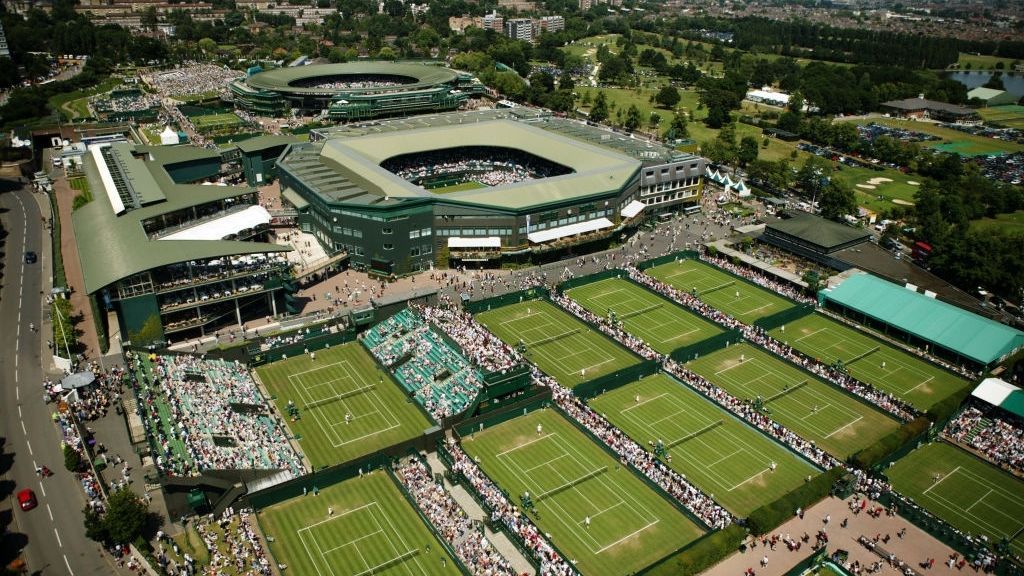
The tennis season is at a crucial turning point. After the intensity and dominance of the clay court, the ATP circuit is preparing to roll out its green carpets, culminating in the prestigious Wimbledon tournament. However, this change of surface, so rooted in the tradition of white sport, presents a radically different scenario, a labyrinth of angles and speeds that tests the adaptability of the players.
The grass tour, despite its short duration, just one month on the calendar, has established itself as an essential chapter of the season. Its unique aesthetic and playing conditions, diametrically opposed to those of clay and cement, demand a complete recalibration of strategies and shots. The first steps of this green journey are about to begin, coinciding with the final stretch of Roland Garros. The Stuttgart and Hertogenbosch tournaments, scheduled between June 8 and 14, will mark the starting signal.
Traditionally, the Parisian Grand Slam puts the finishing touch to the clay season. From there, the tennis players begin a dizzying transition to the new surface, with their eyes set on the iconic All England Club. This change is not merely physical, but also mental. The ball bounces lower, the game speeds up and precision becomes even more vital.
However, not all players approach the start of the grass tour with the same background. For some, the green surface is unexplored territory, a blank canvas where they have not yet written a single line of their professional history. This is precisely the case of two of the emerging sensations of Roland Garros.
On the one hand, we find Rafa Jodar. This young Spanish prodigy has burst into the French capital with a dazzling performance, reaching the quarterfinals after beating a combative Pablo Carreño. His next challenge will be to face Alexander Zverev, a duel that promises to be epic. Jódar's track record on clay is spectacular in his first year as a professional, with a title in Marrakech and semifinals in Godó, Madrid and Rome. At only 19 years old, and after the Parisian Grand Slam, he will secure a minimum position of number 23 in the world ranking.
Despite his dominance on clay, Jódar's experience on grass is limited. He has only played four matches on this surface, all of them during his junior stage at Wimbledon in 2024. His professional debut on grass presents itself as a fascinating question. Can he replicate his success on such a different surface?
On the other hand, French emerges strongly Moise Kouamé. This 17-year-old young man has been another of the revelations of the current French Open, reaching the third round and consolidating himself as a new local hope before the fervor of the stands. Currently ranked 318th in the world, next week he will rise to 215th, a considerable jump that reflects his meteoric rise.
Like Jódar, Kouamé's track record in professional weed is non-existent. His only experience dates back to a match at junior Wimbledon in 2024. His first foray into the professional grass circuit will therefore be a senior debut. The pressure of expectations and adaptation to an unknown surface will be your main adversaries.
The grass tour is therefore presented as a melting pot of opportunities and challenges. For Jódar and Kouamé, it represents the definitive litmus test to demonstrate their versatility and their potential to succeed on any surface. The expectation is high to see how these young talents perform on the demanding green carpet, a surface that has crowned legends and seen dreams fade.
The transition from clay to grass is not only a question of technique, but also of mentality. Patience and aggressiveness must find a perfect balance. The points must be shorter, the volleys more precise and the ability to anticipate essential. The players who manage to master these variables are those who, historically, have written their names in gold letters in the history of Wimbledon.
The grass tour schedule, although condensed, offers a range of possibilities. After Stuttgart and Hertogenbosch, the action moves to other tournaments such as Queen's, Halle and Eastbourne, all of them serving as preparation for the big goal: Wimbledon. The accumulation of matches and the progressive adaptation to the surface are key to reaching the third Grand Slam of the year in optimal conditions.
The figure of Rafa Jódar, with his impressive clay record, generates great expectation. His ability to adapt to a faster, lower pot game will be crucial. Will he be able to transfer his power and winning mentality to the grass? The answer to this question will largely define your future progression.
For his part, Moise Kouamé represents the mystery of young French talent. His emergence at Roland Garros has been spectacular, showing a maturity inappropriate for his age. Grass could be the perfect setting for his explosive tennis and confidence to be consolidated at the international level.
Tennis, in its constant evolution, gives us stories of improvement and discovery every season. The grass tour, with its aura of tradition and its intrinsic demands, is the perfect setting for new stars to shine. The challenge is set for Jódar and Kouamé. The tennis world is watching closely.
Frequently Asked Questions about the Grass Tour and New Promises
- When does the weed tour start in 2026?
- The 2026 grass tour will kick off the second week of Roland Garros, with the first tournaments set for the week of June 8-14.
- What are the first tournaments on the grass tour?
- The first tournaments on the grass tour are those in Stuttgart and Hertogenbosch.
- Which Spanish player has stood out at Roland Garros and will debut on grass?
- Rafa Jódar, after his great performance at Roland Garros, will make his professional debut on the grass tour.
- Which French player has broken through with force and faces the grass surface for the first time?
- The young French tennis player Moise Kouamé, after his outstanding performance at Roland Garros, will make his first professional appearance on grass.
- What is the main difference between clay and grass in tennis?
- Grass is characterized by a lower and faster bounce of the ball, which favors more aggressive play and volleys, in contrast to the higher and slower bounce of clay.
- How many matches has Rafa Jódar played on grass at a professional level?
- Rafa Jódar has so far played four matches on grass, all of them in his junior stage at Wimbledon 2024.
- How old is Moise Kouamé?
- Moise Kouamé is 17 years old.
- Which Grand Slam closes the clay season?
- The Grand Slam that closes the clay season is Roland Garros.
- What implications does the transition to grass have for players?
- The transition to grass requires an adaptation in hitting technique, game strategy and mentality, since the speed and bounce of the ball are very different from other surfaces.
- Where can you find more information and analysis about tennis?
- For more information and analysis, we invite you to join our community on Telegram: https://t.me/casino_gurus
https://casinos-guru.com/el-misterio-de-la-hierba-jovenes-talentos-espanoles-y-franceses-se-enfrentan-a-la-superficie-mas-exigente/