

Your Car's Best Kept Secret: When to Change the Timing Belt and the Ideal Pressure of Your Tires Revealed by a TikTok Expert
A mechanic goes viral in 2026 solving the most common doubts of Spanish drivers, democratizing automotive knowledge.
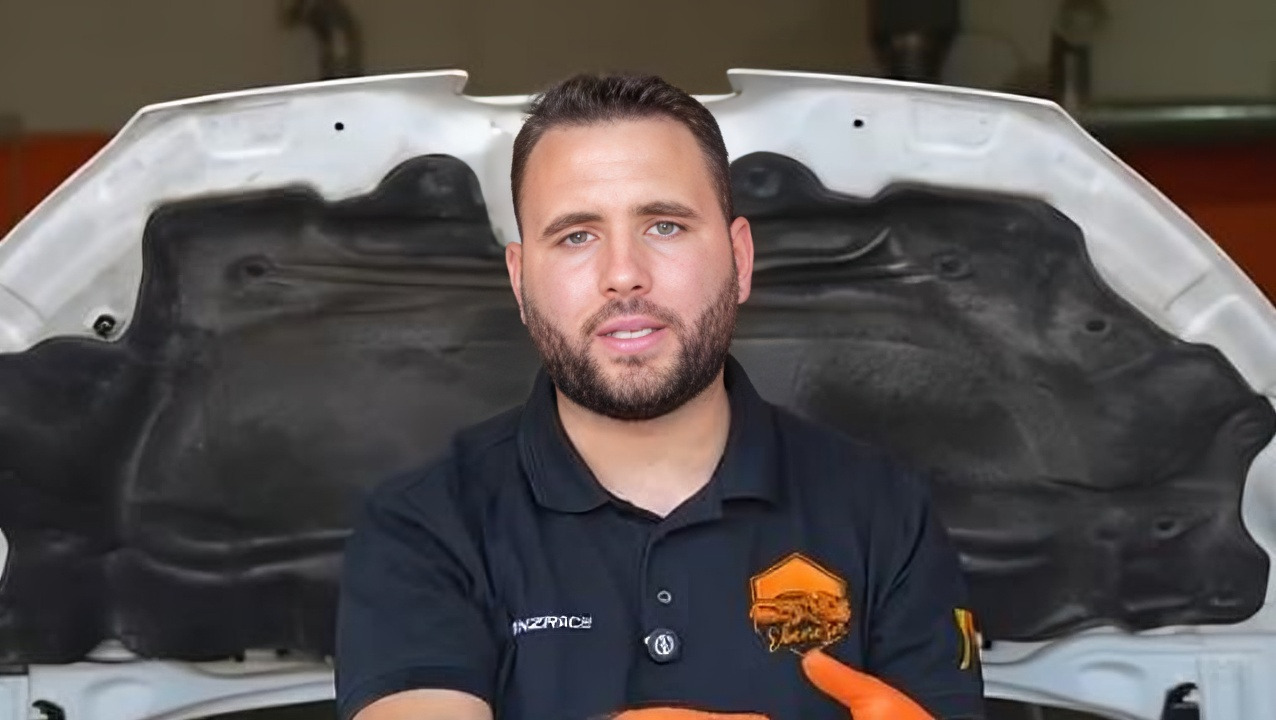
In the digital age of 2026, the barriers between expert knowledge and the general public are collapsing at a dizzying pace. If just a few years ago consulting a trusted mechanic was the only way to resolve the most intricate doubts about our vehicles, today social networks have drastically shortened that distance. A paradigmatic example of this democratization of automotive knowledge is found in Juan José Ebenezera mechanic who, through his TikTok channel, has become a reference for thousands of Spanish drivers.
In one of his most recent videos, which has garnered notable popularity, Ebenezer addresses one of the most worrying issues in car maintenance: the frequency with which we must replace the crucial timing belt. This component, vital for the correct functioning of the engine, can lead to million-dollar breakdowns if its change is unduly postponed.
The mechanic clearly explains the two main aspects to consider. “Here I tell you the same thing as with the oil issue,” he begins by explaining, drawing a parallel with another fundamental maintenance element. “If you want to do what the manufacturer says, follow the manufacturer's maintenance plan,” he advises, detailing that builders' recommendations vary greatly, and can range from 200,000 kilometersthe 100,000 kilometers or, in some cases, indicating that they are pieces designed for “a lifetime”, especially those that are chains or are bathed in oil.
However, Ebenezer does not stop at the mere reproduction of manufacturing instructions. “If you want to do what we technicians advise you,” he continues, “change it every Approximately 100,000 km or every 5 yearsmore or less so that you have an average, depending on the car.” This practical recommendation seeks to offer a margin of safety that protects the driver from unforeseen events, prioritizing the longevity and reliability of the engine over the extreme optimization of maintenance intervals.
The key, according to the expert, lies in personalization and direct consultation. “The ideal is that, whatever car you have in terms of distribution, you approach a technician or a workshop and say 'hey, how often do you recommend that I change it for this car?'” he suggests. By following this personalized plan, the driver can ensure that their vehicle receives optimal care, ensuring greater durability and avoiding costly mechanical problems in the future.
But Ebenezer's wisdom does not end in distribution. With the same agility and clarity that characterize him, the mechanic delves into another recurring question that torments many behind the wheel: tire pressure. An apparently simple topic, but with direct implications on safety, consumption and the useful life of the wheels.
“The tire pressure, the more air you have is not the better,” he says forcefully. He explains that excess pressure causes the tire to “hollow”, that is, the tread loses uniform contact with the asphalt, concentrating wear in the central area. On the contrary, insufficient pressure generates the opposite effect: “if you have it too loose, what it is going to do is that it is going to sink in the middle and wear out on the sides”, causing premature and uneven wear on the sides of the tire.
Ebenezer's recommendation is to find a balance. “The tire does not have to be too full or too empty,” he emphasizes. Fortunately, the information to achieve this balance is often at our fingertips. “In all cars, whether on the gas cap, on the edge of the door or somewhere, it usually indicates the pressure depending on the load of the car,” he details, pointing out the most common places to find this vital information.
However, the mechanic anticipates the possibility that this information may not be available or may be difficult to interpret. When in doubt, he offers practical and universal advice. “But if you have absolutely no information, you have no idea and you don't know what pressure to put in the car, before going too empty or too full, put 2.5 barswhich is more or less standard,” he advises as a general security measure.
This figure, 2.5 bars, is presented as a reliable starting point, regardless of whether the car carries more or less load, or whether it is the front or rear axle. “It doesn't matter if it's a front axle, a rear axle, a car with a little more load or a little less load,” argues the content creator. Its premise is clear: in the face of uncertainty, it is preferable to opt for a standard pressure that avoids harmful extremes.
Juan José Ebenezer's video, which has already accumulated thousands of views and comments, demonstrates the power of digital platforms to disseminate practical and useful knowledge. His ability to translate technical jargon into accessible and understandable language has made him a key figure for Spanish drivers, empowering them to make more informed decisions about the maintenance of their vehicles.
The trend started by Ebenezer is only growing. More and more motor professionals are using social networks to share their experience, creating communities of fans and drivers seeking to improve the lifespan and performance of their cars. This phenomenon not only benefits the end user, but also contributes to greater awareness of the importance of preventive maintenance and road safety.
In a world where information flows at the speed of a click, figures like Juan José Ebenezer are essential to demystify technical aspects and make them available to everyone. His legacy on TikTok is not only that of a mechanic who resolves doubts, but that of a digital educator who has transformed the way Spaniards interact with their cars.
The next time you get behind the wheel, remember these tips. A small gesture of attention to the timing belt and the pressure of your tires can translate into kilometers of peace of mind and savings. Knowledge is within your reach, you just have to know where to look.
Frequently Asked Questions about Car Maintenance:
- How often should the timing belt be changed according to the manufacturer? The frequency varies greatly depending on the manufacturer, and can be from 100,000 km to 200,000 km or even more, depending on the model and type of distribution.
- What is the general recommendation of mechanics for changing the timing belt? Most technicians advise changing it every 100,000 kilometers or every 5 years, whichever comes first, as a precaution.
- What happens if I don't change the timing belt in time? If the timing belt breaks, it can cause severe and very expensive damage to the engine, becoming irreparable in some cases.
- Where can I find the recommended pressure for my car tires? The information is usually found on a sticker on the driver's door frame, fuel filler cap, or in the owner's manual.
- What happens if the tires have too much pressure? Excess pressure causes the center of the tread to lift off the asphalt, causing irregular and concentrated wear in that area.
- What happens if the tires have too little pressure? The lack of pressure causes the tire sidewalls to support more weight, causing excessive wear on the sides and higher fuel consumption.
- What is the recommended standard pressure if I can't find the specific information for my car? As a general measure and when in doubt, a pressure of 2.5 bars is recommended in all tires.
- Does the load of the car influence the tire pressure? Yes, the recommended pressure usually varies depending on whether the car has a light or heavy load. Manufacturers usually indicate different pressures for each scenario.
- Is it advisable to check the tire pressure with the car warm? No, tire pressure should always be measured when the car is cold, since temperature increases the internal pressure.
- How often should I check my tire pressure? It is recommended to check the tire pressure at least once a month and before long trips.
Do you want to stay up to date with more tips and news from the world of motorsport? Join our community at Telegram.
https://casinos-guru.com/el-secreto-mejor-guardado-de-tu-coche-cuando-cambiar-la-correa-de-distribucion-y-la-presion-ideal-de-tus-neumaticos-revelado-por-un-experto-de-tiktok/










 Pronóstico Deportivo: Džiugas Telšiai vs. Banga...
 Pronóstico: Celje vs Koper – 16 de mayo d...
 Pronóstico Deportivo: Diósgyőr vs Paksi –...
 Pronóstico Deportivo: Conner Huertas vs. Ignaci...
 Final en Roma: Coco Gauff vs. Elina Svitolina &...
 Pronóstico del partido: Italia vs. Canadá ̵...
 Pronóstico del partido Chelsea vs Manchester Ci...
 Pronóstico para el partido Madison Keys vs. Yul...
 Pronóstico Deportivo: Tristan Boyer vs. Dali Bl...