

Controversy in Albania! Amateur on a Platinum? Professional padel under the magnifying glass
The unusual case of Lok Hei Jamie Yau in the CUPRA FIP Tour of Tirana shakes the foundations of elite sport.
Last week, the professional paddle tennis circuit was involved in an unprecedented controversy. The epicenter of the controversy was located in Albania, during the celebration of the highest ranking tournament of the CUPRA FIP Tour: the Platinum of Tirana. A fact that has called into question the integrity and professionalism of the sport that we love so much.
The protagonist of this unusual situation was Lok Hei Jamie Yau, a paddle tennis player from Hong Kong, current number 954 in the FIP ranking. Yau, who to date had only 17 points on his record without having won a single match, played in the final draw of the prestigious tournament alongside the Canarian Íñigo Jofre, twenty-ninth player in the world. The images that emerged from the match left a bitter feeling, showing a level of play and an attitude far removed from what is expected of a professional.
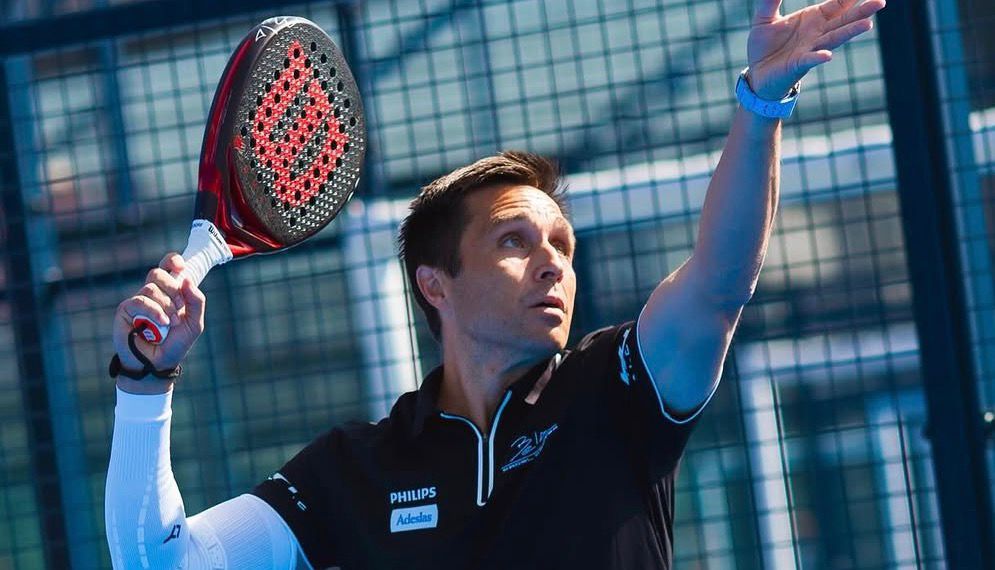
The controversy did not take long to resonate in the padel ecosystem. Fernando Belasteguín, considered by many the best player of all time, did not hesitate to raise his voice. In a conversation with 'patocaruso', Bela expressed his perplexity: “How can it be that in a professional tournament they let an amateur player participate? It had never happened in a Platinum until it happens. If we want to be a serious sport, you have to correct it. It is not a good image for paddle tennis.” His words reflect the concern of many fans and professionals about an event that could set a dangerous precedent.
The legendary Argentine player focused on the responsibility of the International Padel Federation (FIP) and not on the player Íñigo Jofre. “I'm not criticizing the professional player,” Bela clarified, “if the rule allows it and he receives the money that covers all the tournaments during the year, why can't he do it? There is a void and amateurs use it to be able to play.” This reflection reveals a crack in the current regulations, a loophole that, according to Bela, is being exploited by players without the level required to compete at the elite level.
The situation has generated an intense debate about the access criteria to the highest category tournaments. Should there be a more rigorous filter to ensure that only players with a proven competitive level can participate in Platinum events? The FIP is now faced with the difficult task of addressing this issue and finding a solution that guarantees the fairness and prestige of the professional circuit.
This incident underscores the importance of maintaining the integrity of the sport. Paddle tennis has experienced exponential growth in popularity in recent years, attracting thousands of new fans and sponsors. To consolidate its status as an elite sport, it is essential that the competitions are developed under criteria of impeccable professionalism and sportsmanship.
The participation of players with a ranking significantly lower than their rivals raises questions about the future of padel. Are we facing a paradigm shift where access to tournaments is democratized to the point of diluting the competitive essence? Or, on the contrary, is this a specific error that the FIP will correct immediately?
The padel community waits with anticipation for the FIP's response. The credibility of the circuit and the trust of professional players depend on decisive and transparent action. The image of the sport is at stake, and it is crucial that the necessary measures are taken to safeguard its reputation and its future.
Meanwhile, the debate continues on social networks and in sports gossip. Fans, players and analysts debate the implications of this event. Some defend the opening of the circuit, arguing that it encourages participation and growth of the sport on a global level. Others, however, insist on the need to maintain a standard of quality and professionalism that clearly differentiates the categories and guarantees the competitiveness of elite events.
The FIP has the opportunity to demonstrate its commitment to professional padel. Clear and fair regulation is essential to avoid future controversies and ensure that the sport continues to evolve positively. The case of Albania has opened a door, and now is the time to decide whether to close it or open it even more, with the consequences that each option entails.
The ball is in the FIP's court. The fans expect a strong response that reaffirms the values of paddle tennis and guarantees a bright future for this constantly expanding sport. Professionalism must be the flag that guides each decision, ensuring that elite tournaments are a reflection of the talent and dedication of the best players in the world.
This incident invites us to reflect on the evolution of paddle tennis and the challenges it faces. The globalization of sport is a reality, but it should not come to the detriment of quality and competitiveness. The FIP must find a balance that allows growth without sacrificing the principles that have made padel such an exciting sport.
The opinion of figures like Fernando Belasteguín has considerable weight. His experience and dedication to padel make him an authoritative voice to point out areas of improvement. The FIP should take their reflections into account to chart the path forward.
In short, the case of Albania is a wake-up call for the world of paddle tennis. It is a crucial moment to reaffirm the commitment to professionalism and integrity, ensuring that the sport continues to grow hand in hand with quality and sportsmanship. The fans and players deserve a circuit that is a true reflection of excellence.
The controversy generated by the participation of Lok Hei Jamie Yau in the CUPRA FIP Tour of Tirana is a clear indication that the International Padel Federation must review and update its regulations. Transparency and equity are fundamental pillars for the development of any professional sport, and paddle tennis is no exception.
The future of professional padel involves the adoption of measures that ensure the competitiveness of its most important tournaments. The FIP has the responsibility of guaranteeing that each event is a true celebration of sport, where the best compete on equal terms.
This episode reminds us that, even in fast-growing sports, attention to detail and rigorous enforcement of regulations are essential to maintaining the trust and respect of the sports community. The FIP must demonstrate its ability to manage these situations with firmness and judgment.
The conversation about professionalism in paddle tennis is more alive than ever. The case of Albania has served to revive this debate, and it is to be hoped that the FIP will take action on the matter to ensure a more solid and transparent future for the circuit.
It is essential that the FIP listens to the voices of its most emblematic players, such as Fernando Belasteguín, and acts accordingly. The integrity of the sport is at stake, and only with correct decisions can the trust of all those who love paddle tennis be maintained.
The padel community awaits the next actions of the FIP with interest. How this controversy is handled will largely define the direction of the sport for years to come. Professionalism and transparency must be the guiding principles.
Padel continues to evolve, and with it, the challenges. The FIP must rise to the occasion, adapting its regulations to reflect the growth and ambition of the sport. The case of Albania is an opportunity to strengthen the circuit.
The importance of a rigorous FIP ranking and clear access criteria to elite tournaments has never been more evident. The FIP is tasked with ensuring that the competition is fair and that the most talented players have the opportunity to shine on the biggest stages.
The controversy in Albania has highlighted the need for a deep reflection on the padel competition model. The FIP must lead this process, ensuring that the sport continues to grow in a sustainable and professional manner.
In short, the CUPRA FIP Tour Platinum incident in Tirana is a turning point. The FIP now has the responsibility to act decisively to safeguard the integrity and prestige of professional padel. The community waits with anticipation.
Frequently Asked Questions
What exactly happened at the padel tournament in Albania?
A player with a very low ranking, Lok Hei Jamie Yau (954th), played in the final draw of a CUPRA FIP Tour Platinum tournament, generating great controversy due to his level of play, considered amateur.
Who is Lok Hei Jamie Yau?
He is a paddle tennis player from Hong Kong, whose FIP ranking is 954. Until this tournament, he had barely added 17 points without winning a match.
What does it mean for a tournament to be “Platinum”?
Platinum tournaments are the highest category events within the FIP circuit, offering more ranking points and higher financial prizes, and therefore, a very high level of competition is expected.
What did Fernando Belasteguín think about the incident?
Fernando Belasteguín expressed his surprise and concern, questioning how an amateur player can participate in an elite professional tournament and pointing out that this gives the sport a bad image if it is not corrected.
Was the player Íñigo Jofre criticized?
No, Belasteguín clarified that the criticism was not directed at the professional player Íñigo Jofre, but at the FIP for allowing this type of situation through gaps in the regulations.
What responsibility does the FIP have in this case?
The FIP has the responsibility of reviewing and adjusting its regulations for access to tournaments to ensure that only players with an adequate competitive level can participate in higher categories, such as Platinum.
Why is the FIP ranking important?
The FIP ranking is crucial to determine the classification of players and their access to the different tournaments on the circuit. A low ranking generally indicates a non-professional level of play.
What implications does this event have for the future of padel?
This incident highlights the need to debate and improve the criteria for professionalization and access to tournaments to maintain the integrity and prestige of paddle tennis as an elite sport.
Is any action expected from the FIP?
Yes, the FIP is expected to take steps to address this controversy and review its regulations, in order to prevent similar situations from recurring in the future.
Where can I find more information and discuss this topic?
We invite you to join our community on Telegram to follow the conversation and stay up to date with the latest news: https://t.me/casino_gurus
https://casinos-guru.com/polemica-en-albania-amateur-en-un-platinum-el-padel-profesional-bajo-la-lupa/