

'33 Days': Carles Porta Reveals the “Why” of a Escape that Marked a Milestone in Catalonia
The master of Catalan true crime makes his debut in fiction with a series that delves into the psyche of escapees and their pursuers, available on atresplayer since June 7.
Carles Porta, a name synonymous with meticulous investigation and captivating storytelling in the true crime genre in Catalonia, takes a bold step into the universe of fiction with the release of '33 Days'. This long-awaited series, which promises to reveal the deepest motivations behind a real event, delves into the story of two inmates whose daring escape kept an entire community in suspense.
The plot is directly inspired by the shocking case of Brito and Picatoste, characters who in fiction adopt the identities of Prieto and Calatrava. The series does not limit itself to recounting the events, but dares to explore the complex psychological and emotional framework that led to this dramatic adventure. Starting next Sunday, June 7viewers will be able to immerse themselves in this story through the streaming platform atresplayer.
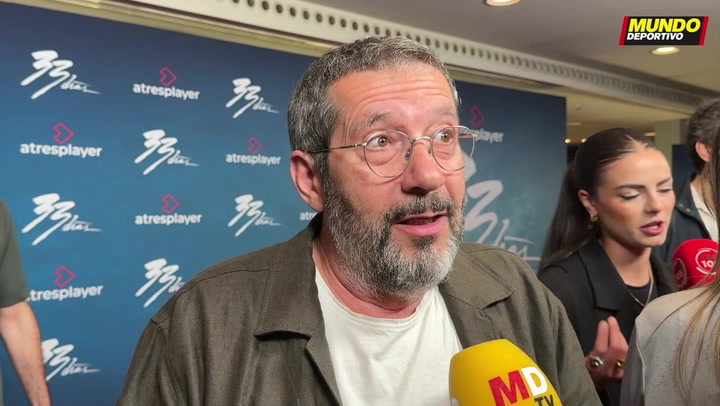
During the exclusive presentation at the Mooby Forest Cinema of Barcelona, an event that brought together numerous media, including 'Sports World', Carles Porta shared the ins and outs of his foray into fiction. The acclaimed journalist, whose career in the nights of Catalan public television is indisputable, explained the reasons that prompted him to address this particular case in the format of a drama series.
The fundamental distinction between 'Crims' and '33 Days' lies in the narrative approach. While in his acclaimed true crime show Porta focuses on “what happened and how it happened,” in this new atresplayer series the goal is to unravel the “why.” This change in perspective marks a significant evolution, allowing a deep immersion into the personality of the protagonists, both those who carried out the escape and those who were in charge of their persecution.
The choice of this specific case for his debut in fiction was not coincidental. Porta revealed that it was the first case they addressed in 'Crims', giving it a special symbolic value. Furthermore, it was the first project that attracted the interest of Atresmedia, with José Antonio Antón at the helm, who showed a firm desire to bring it to the screen. Given this opportunity and his own ambition to explore fiction, the decision to sell the rights came as a natural step.
The change of names of the fugitives in the series responds to a creative and ethical need. Porta explained that fiction allows us to explore territories that reality, by its nature, restricts. Keeping the real names could have limited narrative freedom and the ability to delve into speculative or interpretive aspects of the characters and their motivations. By altering the names, the aim is to maintain honesty both with the public and with the individuals themselves, thus allowing fiction to be made of what is only intuited or interpreted, without attempting to offer an absolute truth.
The series faces the delicate line that separates empathy from the idealization of complex characters, a recurring debate in cases such as those of Jeffrey Dahmer or Rosa Peral. Porta considers that the ability to empathize or idealize is an individual construction, influenced by the circumstances of each viewer. The objective of the series is, precisely, to generate that empathy at certain moments so that, later, the public can feel rejection. This narrative game, according to the creator, enriches the connection with history.
The intention is for the series to position the characters and the narrative in the right place, allowing the viewer to form their own judgment. The duality of feeling empathy and, at the same time, repulsion, is a powerful narrative tool that seeks to reflect the complexity of life itself.
The success of '33 Days' opens the door to future adaptations. Porta confirmed that there are other cases of 'Crims' in the process of being turned into fiction, with premieres planned for the coming months and years. Each crime, according to him, contains a deep story with narrative potential. Fiction, in this context, is conceived as a complement to reality, allowing us to explore the dimensions of “why” and the internal aspects of the characters, elements that are often elusive in real investigations.
The series tells the story of Juan José Prieto (played by José Manuel Poga) and Matthew Calatrava (Julián Villagrán), two inmates whose escape from Lleida prison in October 2001 activated an unprecedented security device. For 33 days, his evasion kept the Autonomous Police of Catalonia in suspense, forcing them to improvise in the face of a plan that was becoming more complicated by the minute.
'33 Days' not only recreates the chase, but also focuses on the investigation team of the Mossosa police force then in its beginnings, and in the complex dynamics between the escapees themselves. The series examines how pressure and frustration begin to take their toll on those involved, while the police force, young and often questioned by other institutions, is subjected to constant scrutiny.
The Mossos investigation brings to light the unusual relationship that is forged between Prieto, a small-time but unscrupulous criminal, and Calatrava, a sensitive, educated and addicted criminal. A connection that goes beyond simple camaraderie, reaching a point of mutual protection, even from themselves. The series immerses itself in this game of admiration and dependence, a relationship so intense and passionate that it leads to an ending that is as unexpected as it is moving.
Frequently Asked Questions about '33 Days'
- When does the series '33 Days' premiere?
- The series will be available in atresplayer from Sunday June 7.
- Who is Carles Porta?
- Carles Porta is a renowned Catalan journalist, specialist in the true crime genre, known for his program 'Crims'.
- What real case is '33 Days' based on?
- The series is inspired by the real case of Brito and Picatoste, who in fiction are called Prieto and Calatrava.
- What is the main difference between 'Crims' and '33 Days'?
- 'Crims' focuses on the “what and how it happened,” while ‘33 Days’ delves into the “why it happened,” exploring the psychology of the characters.
- Why are the names of the fugitives changed in the series?
- The names are changed to have greater creative freedom and explore aspects that reality does not allow, maintaining honesty with the audience and the characters.
- What type of relationship is explored between Prieto and Calatrava?
- An intense and passionate relationship is explored, marked by admiration and dependence, which evolves throughout the escape.
- Are the Mossos d'Esquadra protagonists in the series?
- Yes, the series places an important focus on the Mossos investigation team and the challenges they faced as a police force in training.
- Will there be more fiction series based on 'Crims' cases?
- Carles Porta has confirmed that there are several cases of 'Crims' in the process of being adapted into fiction for future releases.
- What platform will broadcast the series?
- The series will be broadcast exclusively on the streaming platform atresplayer.
- Is it possible to empathize with the characters despite their actions?
- The series seeks to generate empathy at certain moments so that the viewer can better understand their motivations, without this implying idealizing them. The objective is for the public to form their own criteria.
If you liked this immersion in the world of true crime and fiction, don't miss more exclusive content and discussions! Join our community on Telegram: https://t.me/casino_gurus
https://casinos-guru.com/33-dias-carles-porta-desvela-el-por-que-de-una-fuga-que-marco-un-hito-en-cataluna/