
Gaudí's Numerical Enigma: A Mathematical Secret in the Sagrada Familia Reveals its Deep Symbolism
The Basilica of Barcelona Hides a Magic Square that Resounds with Christian Passion and Artistic Genius.
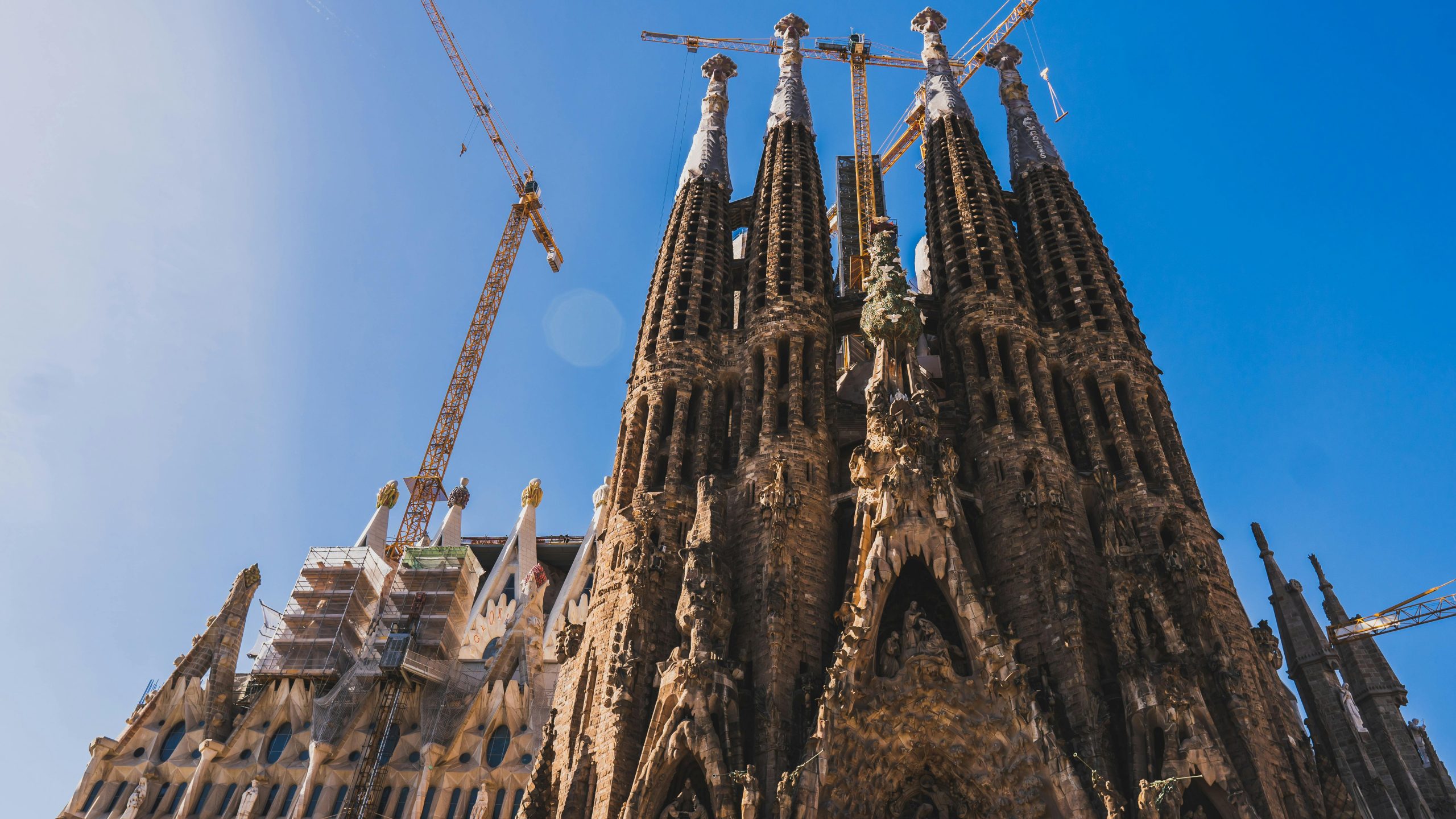
Every year millions of eyes rest on the imposing towers and intricate facades of the Holy Familymarveling at the architectural vision of Antoni Gaudi. However, high above this iconic temple, one detail often goes unnoticed: a mathematical enigma loaded with deep symbolism.
At a time when the basilica is once again making headlines, especially after the recent papal visit, this unique numerical mystery resurfaces with force, attracting those eager to unravel the secrets that await in the most emblematic monument of Barcelona.
The heart of this mathematical enigma beats in the Passion Facadethe face of the temple that narrates with raw emotion the last days of Jesus Christ. Specifically, it is located next to one of the moving crucifixion scenesa detail that, despite being in plain sight, is often lost in the magnitude of the work.
It is a meticulously designed square, composed of 16 boxes that house numbers distributed in a deliberately peculiar way. What at first glance might seem like a mere decorative element hides a fascinating property: the sum of numbers, under multiple combinations, always gives the same result.
Whether going through its rows, columns or even certain diagonals, the attentive visitor will discover that the constant sum is the number 33. This number, far from being arbitrary, resonates with a deep meaning within the Christian tradition, as it corresponds to the age that, according to evangelical accounts, Jesus Christ was at the time of his crucifixion.
Although it is tempting to attribute every singularity of the basilica to Gaudí's mastermind, this intricate numerical square was not directly conceived by the celebrated Catalan architect. The authorship of this enigmatic magic square lies with the sculptor Josep Maria Subirachsthe artist responsible for much of the expressiveness and artistic detail of the Passion Facade.
Subirachs integrated the square into the façade structure during the 1980sas an essential component within the ambitious iconographic program of this section of the temple. Its inspiration came from the traditional magic squares, an ancient mathematical concept known in various cultures, whose main characteristic is the constancy of the sum of its numbers in different directions.
However, the artist did not limit himself to replicating existing models. He introduced significant modifications with respect to classical compositions. Unlike the famous magic square that adorns the engraving “Melencolia I” by Albrecht Dürerwhich adds 34 in all its lines, that of the Sagrada Familia was ingeniously adapted to reach the number 33. To achieve this symbolic figure, Subirachs chose to repeat some numbers and omit others, thus breaking the conventional rules of this type of mathematical constructions.
The result is a work that masterfully fuses art, religious symbolism and mathematical precision, consolidating itself as one of the most photographed and commented details of the basilica. Decades after its incorporation, this numerical square continues to captivate the curiosity of visitors from all over the planet, who strive to decipher the latent meaning behind its enigmatic arrangement of numbers.
Frequently Asked Questions about the Sagrada Familia Mathematical Enigma:
Where is the magic square in the Sagrada Familia?
It is located in the Passion Facadenear a crucifixion scene.
Who designed the magic square?
It was designed by the sculptor Josep Maria Subirachs.
What does the magic square of the Sagrada Familia add up to?
The sum of the numbers in rows, columns and some diagonals is always 33.
Why is the number 33 important in this context?
It corresponds to the age of Jesus Christ at the time of his crucifixion.
Is this magic square the same as other famous magic squares?
No, Subirachs introduced modifications, such as adding 33 instead of 34, repeating and omitting numbers.
When was the magic square added to the façade?
He joined the 1980s.
What does the Passion Facade represent?
It represents the last days of Jesus Christ.
Is it known if Gaudí participated in the design of the magic square?
No, the design was the work of Josep Maria Subirachsnot by Gaudí directly.
What additional symbolism can the number 33 have?
In addition to the age of Christ, the number 33 has other connotations in various traditions, but its main connection here is with the Passion.
Are there other mathematical enigmas in the Sagrada Familia?
While this is the best known, Gaudi's architecture often incorporates complex mathematical and geometric principles.
Would you like to explore more about the secrets and symbolism of the Sagrada Familia or would you prefer us to talk about current sports news? Ask me anything you want! And if you are interested in the world of betting and casinos, I invite you to join our community on Telegram: https://t.me/casino_gurus
https://casinos-guru.com/el-enigma-numerico-de-gaudi-un-secreto-matematico-en-la-sagrada-familia-desvela-su-profundo-simbolismo/









 Pronóstico Deportivo: Džiugas Telšiai vs. Banga...
 Pronóstico: Celje vs Koper – 16 de mayo d...
 Pronóstico Deportivo: Diósgyőr vs Paksi –...
 Pronóstico Deportivo: Conner Huertas vs. Ignaci...
 Final en Roma: Coco Gauff vs. Elina Svitolina &...
 Pronóstico del partido: Italia vs. Canadá ̵...
 Pronóstico del partido Chelsea vs Manchester Ci...
 Pronóstico para el partido Madison Keys vs. Yul...
 Pronóstico Deportivo: Tristan Boyer vs. Dali Bl...