

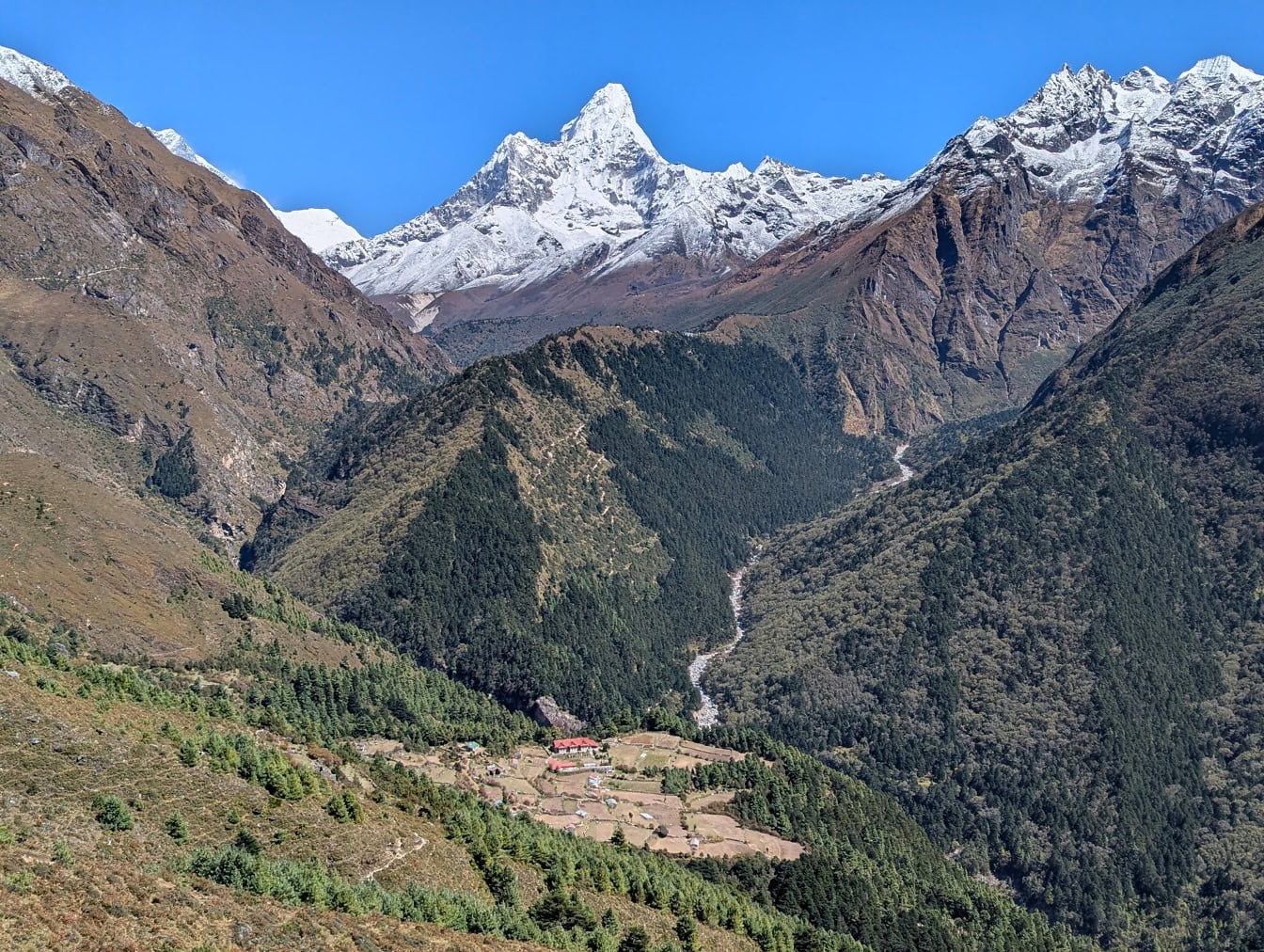
The Himalayas turn green: A blessing or a climate warning?
Greening is advancing at the top of the world, transforming ecosystems and challenging the future of water in Asia.
The roof of the world, the majestic Himalayas, is undergoing a silent but profound transformation. The peaks that for millennia have been crowned by perpetual snow and sparse vegetation, now see how a green mantle expands to unsuspected heights. This phenomenon, named by scientists as “greening”is one of the most obvious signs of the advance of climate change in one of the most sensitive regions on the planet.
Everest, the colossus of 8,848.86 metersis just a point in a vast mountainous territory whose natural resources are constantly mutating. Rising global temperatures, an undeniable reality, are pushing the vegetation line upward, colonizing areas previously reserved for ice and bare rock.
Recent studies, led by prestigious institutions such as the University of Exeter in the United Kingdom, have documented how forests are progressively moving to higher elevations. This advance is not a simple aesthetic change to the landscape; It entails far-reaching ecological implications that worry the international scientific community.
The expansion of vegetation at extreme altitudes alters fundamental processes of the water cycle. Snow accumulation, evaporation and infiltration into the soil are modified. Far from being a sign of greater ecological health, an uncontrolled increase in vegetation can destabilize an ecosystem that is vital for millions of people.
The Himalayas function like a gigantic “water tower” for much of Asia. Essential rivers arise from its glaciers that nourish countries such as the India, China, Nepal and Bangladesh. Any alteration in this delicate water balance has the potential to trigger long-term water availability crises, affecting agriculture, consumption and development of these nations.
Furthermore, this greening can have a feedback effect. Greater plant cover tends to absorb more solar radiation, a phenomenon known as albedo. This means that the surface becomes hotter, in turn accelerating the melting of ice in some areas, further aggravating the situation.
Experts agree that there are no magic or immediate solutions to reverse this process. However, research and ongoing monitoring are crucial. The use of advanced technology, such as satellite observation from agencies such as the NASA and the United States Geological Survey (USGS)allows you to monitor changes in real time and anticipate possible risks.
The climatic complexity of the Himalayas is such that small variations in temperature can have disproportionate effects on the mountains. Therefore, precision in prediction models and scientific collaboration are key to understanding and mitigating future consequences.
At a global level, the root of the problem continues to be the increase in greenhouse gas emissions. The fight against global warming is, therefore, the most effective measure to stop the advance of phenomena such as greening in high mountains.
In short, the “greening” of the Himalayas is not intrinsically negative. The problem lies in its expansion in such a fragile and ice-dependent ecosystem. The current challenge is to deepen our knowledge of this phenomenon and address its causes to prevent changes in the water balance of the Himalayas from becoming irreversible.
Frequently Asked Questions about Himalayan Greening:
- What is “greening” of the Himalayas?
- It is the progressive displacement of vegetation towards higher altitude areas in the Himalayas, caused by the increase in global temperatures.
- Why does this phenomenon worry scientists?
- Because it alters fragile ecosystems, modifies the water cycle and can have serious consequences for water availability in Asia.
- What role does the Himalayas play in water supply in Asia?
- It acts as a “water tower”, since essential rivers for millions of people in countries such as India, China, Nepal and Bangladesh are born from its glaciers.
- How does greening affect the water cycle?
- It can modify snow accumulation, evaporation and infiltration into the soil, affecting the water supply that depends on snowmelt.
- What is albedo and how is it related to greening?
- Albedo is the ability of a surface to absorb heat. More vegetation can increase heat absorption, accelerating melting.
- What institutions are investigating this phenomenon?
- Institutions such as the University of Exeter, NASA and the United States Geological Survey (USGS) are actively involved in research and monitoring.
- Are there immediate solutions to stop greening?
- There are no immediate solutions. The key is continued research, monitoring and reduction of global greenhouse gas emissions.
- What can be done at a global level to mitigate this problem?
- The main measure is the reduction of greenhouse gas emissions to stop global warming.
- Is the increase in trees in the Himalayas always negative?
- It is not negative in itself, but its expansion in such a delicate and ice-dependent ecosystem can trigger changes that are difficult to reverse in the water balance.
- Where can I find more information about climate change and its effects?
- We invite you to join our community on Telegram to stay up to date with the latest news and analysis: https://t.me/casino_gurus
https://casinos-guru.com/el-himalaya-se-tine-de-verde-una-bendicion-o-una-advertencia-climatica/